
St. Charles Parish Criminal Court Records
A criminal court record begins when the prosecution files a charging document with the court and the Clerk opens or maintains the case file. In St. Charles Parish, felony and other district-court criminal matters are handled through the 29th Judicial District Court and the Clerk of Court. The Clerk's criminal and traffic page links criminal e-filing and a request-for-new-court-date form, which shows that criminal case administration runs through the Clerk even when the hearing itself is before a judge.
The 29th JDC is a general-jurisdiction district court with original jurisdiction over civil, criminal, and juvenile matters. Its divisions are Division C, Division D, and Division E. Those divisions are not separate criminal courts. A criminal case is allotted under court procedures and then appears in the assigned division's hearing workflow. Arrest and booking details may appear in sheriff systems, but the court case file and outcome belong in the criminal court record.
The Clerk criminal and traffic page is an assigned source for St. Charles Parish criminal court records.
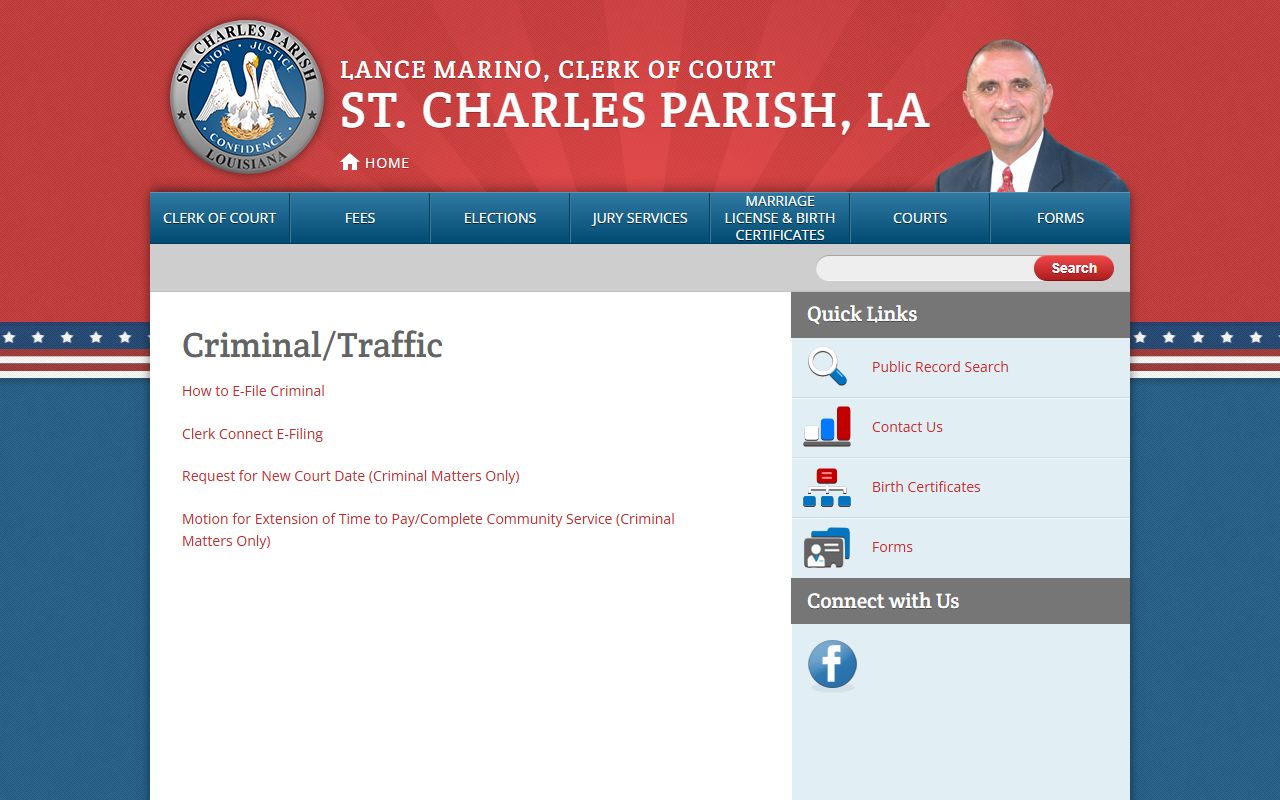
That source ties criminal case access to Clerk functions rather than to a jail-only lookup.
Search St. Charles Parish Criminal Cases
Criminal court record access follows the same local chain as other court records, but with extra care about charge status, disposition, and restricted items. Start with the Clerk's public records search links to eVault and ClerkConnect. ClerkConnect is specifically referenced in the Clerk's criminal e-filing instructions, and the accessible research found that a user signs in or creates an account for criminal e-filing. If the case cannot be confirmed online, call or visit the Clerk.
- Search the Clerk's public records links and use St. Charles as the parish when the portal asks for it.
- Use a defendant name, known case number, or filing context to locate the criminal case entry.
- Read the docket for arraignment, motions, plea, disposition, sentencing, and court costs.
- Separate filed charges from convictions before relying on the result.
- Request certified criminal court records from the Clerk if a legal copy is needed.
The St. Charles Parish arrest records and court charges page focuses on the arrest-to-charge path; this criminal page focuses on the full case file after court filing.
St. Charles Parish Criminal Case Flow
A criminal case moves from an accusation into a court file through a series of events. Each stage may create a docket entry or filed document. The charge may be amended, reduced, dismissed, or resolved by plea or trial. A person reading St. Charles Parish criminal court records should track both the first charge and the final disposition because they can differ.
Case flow: Charges Filed › Arraignment › Pretrial and Motions › Plea or Trial › Disposition › Sentencing
| Stage | What Happens |
|---|---|
| Charges filed | The DA files a bill of information, indictment, or other charge document that opens the court case. |
| Arraignment | The defendant is advised of the charges and enters a plea, such as guilty, not guilty, or no contest. |
| Pretrial and motions | Attorneys file requests, argue legal issues, seek continuances, and prepare for plea or trial. |
| Plea or trial | The case resolves by plea, verdict, dismissal, acquittal, or another court action. |
| Sentencing | The court imposes jail or prison time, probation, fines, restitution, costs, or other conditions after conviction. |
The 29th Judicial District Attorney homepage is an assigned source for prosecution context in criminal court records.
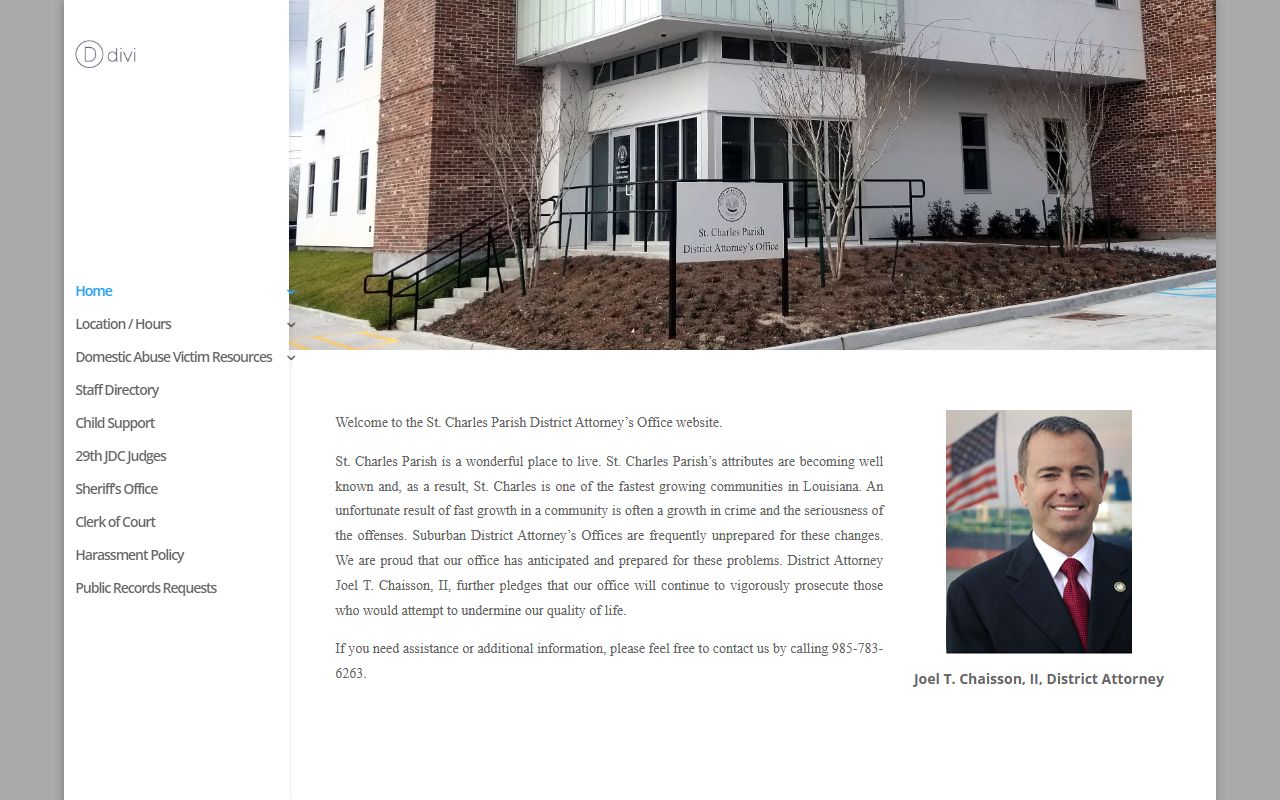
The DA is the office that screens, prosecutes, amends, or dismisses charges after arrest.
What St. Charles Parish Criminal Records Show
St. Charles Parish criminal court records may include charge language, statute references, arraignment, bond, motions, hearing minutes, plea, verdict, disposition, sentence, probation, restitution, fines, and court costs. They may also show the court division, attorneys, filing dates, continuances, and orders. The record should be read as a sequence. A charge near the start of the file does not prove conviction unless the later disposition or sentence supports that result.
| Field | What It Shows |
|---|---|
| Case number | The Clerk-assigned criminal case identifier used for docket review and copy requests. |
| Defendant | The person charged in the criminal case. |
| Charges | The offenses filed by the prosecution, with statute references when available. |
| Arraignment and plea | The hearing and formal answer to the charge, such as guilty or not guilty. |
| Motions and hearings | Requests, court dates, continuances, and judge actions before disposition. |
| Disposition | The outcome for each charge, such as guilty plea, dismissal, acquittal, or other result. |
| Sentence | Jail or prison term, probation, fines, restitution, costs, or other conditions after conviction. |
The State Public Defender District 29 page is an assigned source for defense contact information.
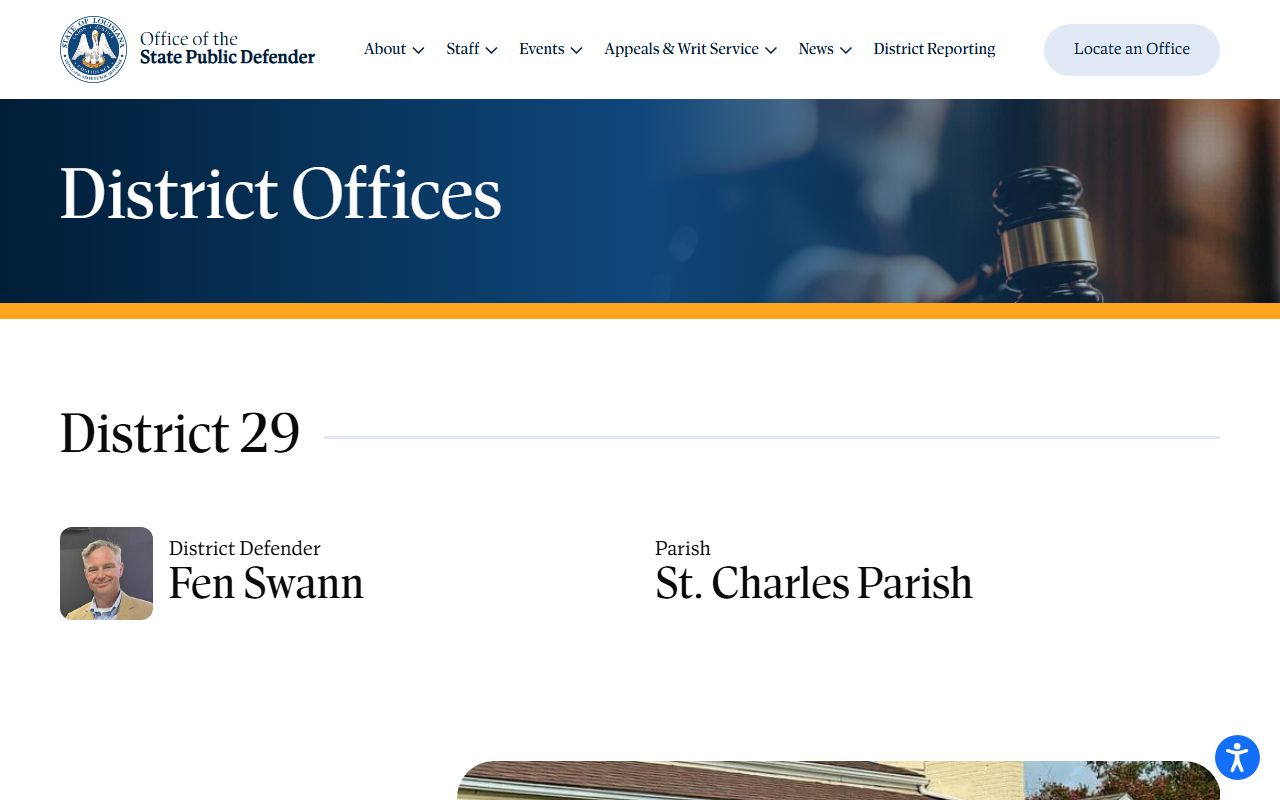
Public defender contact details matter when a person finds active criminal court records and needs appointed-counsel information.
St. Charles Parish Criminal Charges vs Convictions
A charge is an accusation. A conviction is a final finding or plea that establishes guilt. St. Charles Parish criminal court records can show charges that were filed and later reduced, amended, dismissed, or resolved by acquittal. That is why a case record must be read through the disposition and sentencing entries before it is described as a conviction record.
| Point | Charge | Conviction |
|---|---|---|
| Meaning | An offense alleged by the prosecution. | A guilty plea, verdict, or finding accepted by the court. |
| Timing | Appears early in the criminal case. | Appears after plea, verdict, or court finding. |
| Record impact | May be pending, amended, reduced, or dismissed. | Leads to sentence, probation, fines, costs, or other court terms. |
Sealed St. Charles Parish Criminal Records
Louisiana law restricts some criminal court records. Juvenile records are confidential under Children's Code article 412 except for traffic violations and certain authorized exceptions. Criminal investigative material can also be restricted under La. R.S. 44:3 during pending investigations, while bills of information and some booking or citation components remain public. Expungement can limit ordinary public access, but it does not always erase all agency visibility.
| Point | Sealed | Expunged |
|---|---|---|
| Public view | Removed from ordinary public access by court rule or order. | Limited from public access after an eligible expungement process. |
| Agency access | May still be visible to authorized courts or agencies. | May remain visible to law enforcement or agencies in limited settings. |
| Local filing | Handled through the 29th JDC or Clerk when tied to a district-court case. | Usually requires case, arrest, charge, disposition, and eligibility information. |
The Louisiana juvenile record confidentiality law is an assigned source for this criminal-record restriction.
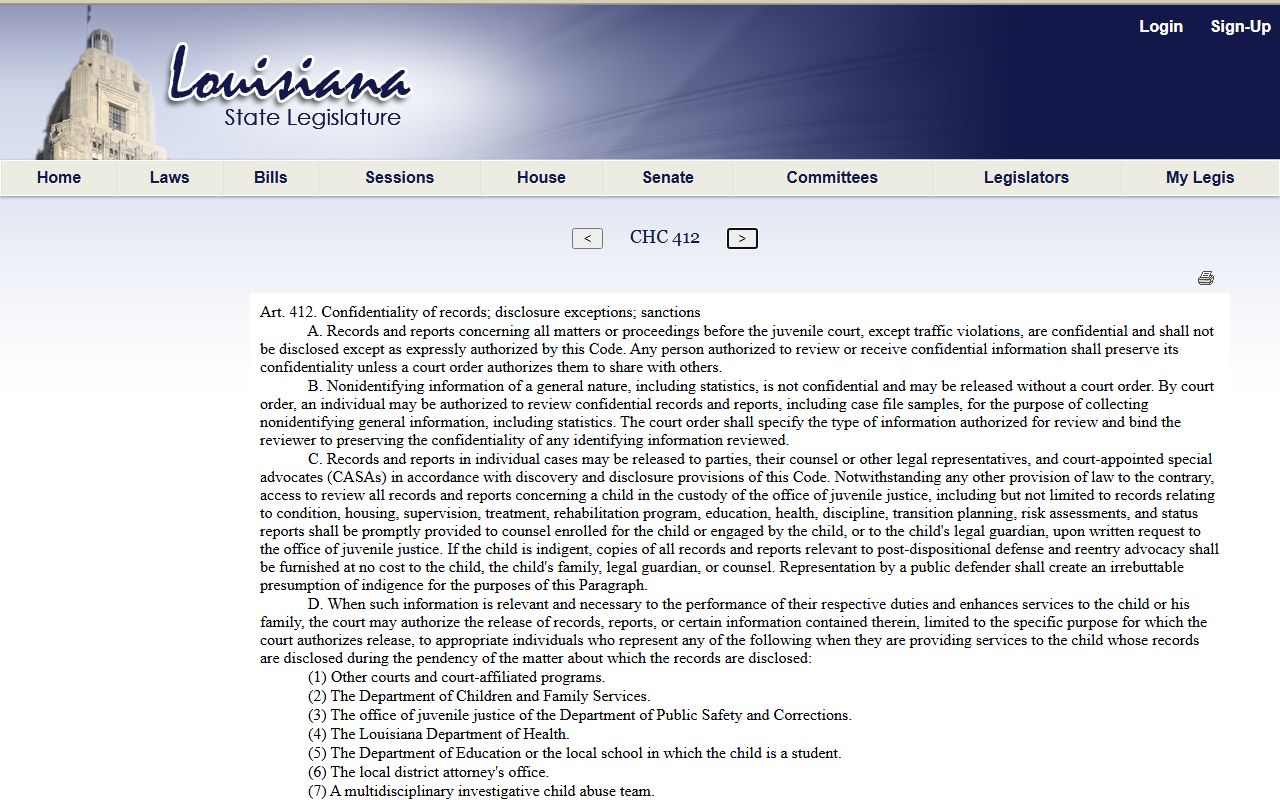
Juvenile confidentiality is one of the clearest limits on public criminal court record access.
Public Access to St. Charles Parish Criminal Records
For adult criminal case files, public access starts with the Clerk as the custodian of district-court records. La. R.S. 44:31 gives adults the general right to inspect or copy public records unless another law restricts access. La. R.S. 44:3 limits certain criminal investigative records but preserves public components such as booking records, summons or citation records, and bills of information.
Background screening is different from casual court-record lookup. A court file may be public, incomplete, restricted, or out of date. Any employment, credit, tenant, insurance, or other FCRA-regulated use must follow the rules for consumer reports. Certified court copies should come from the Clerk, not from a screenshot or unofficial online image.
Important: Public court access does not make a record suitable for employment, tenant, credit, or insurance screening.
The St. Charles Parish Public Defender site is an assigned source for local defense access.

Defense and court contacts help users move from record lookup to the proper court or counsel channel.