
St. Charles Parish Arrest Records and Charges
St. Charles Parish arrest records are usually tied to law-enforcement and jail activity: who was arrested, when the arrest occurred, what agency held the person, and what hold reasons or charge labels appeared at booking. The sheriff's Zuercher jail roster exposes custody-related fields for current inmates at Nelson Coleman Correctional Center. Those arrest-side details can be helpful, but they are not the same as the court charge record filed in the 29th Judicial District Court.
Court charges after arrest are filed or pursued by the 29th Judicial District Attorney and tracked through the Clerk and court. The DA screens cases, accepts charges, amends them, dismisses them, or prosecutes them. The full criminal case file and sentencing outcome belong on the St. Charles Parish criminal court records page, while custody and jail roster facts belong with inmate records. This page focuses on the bridge between the two: arrest facts, charge labels, charging documents, and charge status.
The jail roster field configuration endpoint is an assigned source for arrest-record and custody-field context.
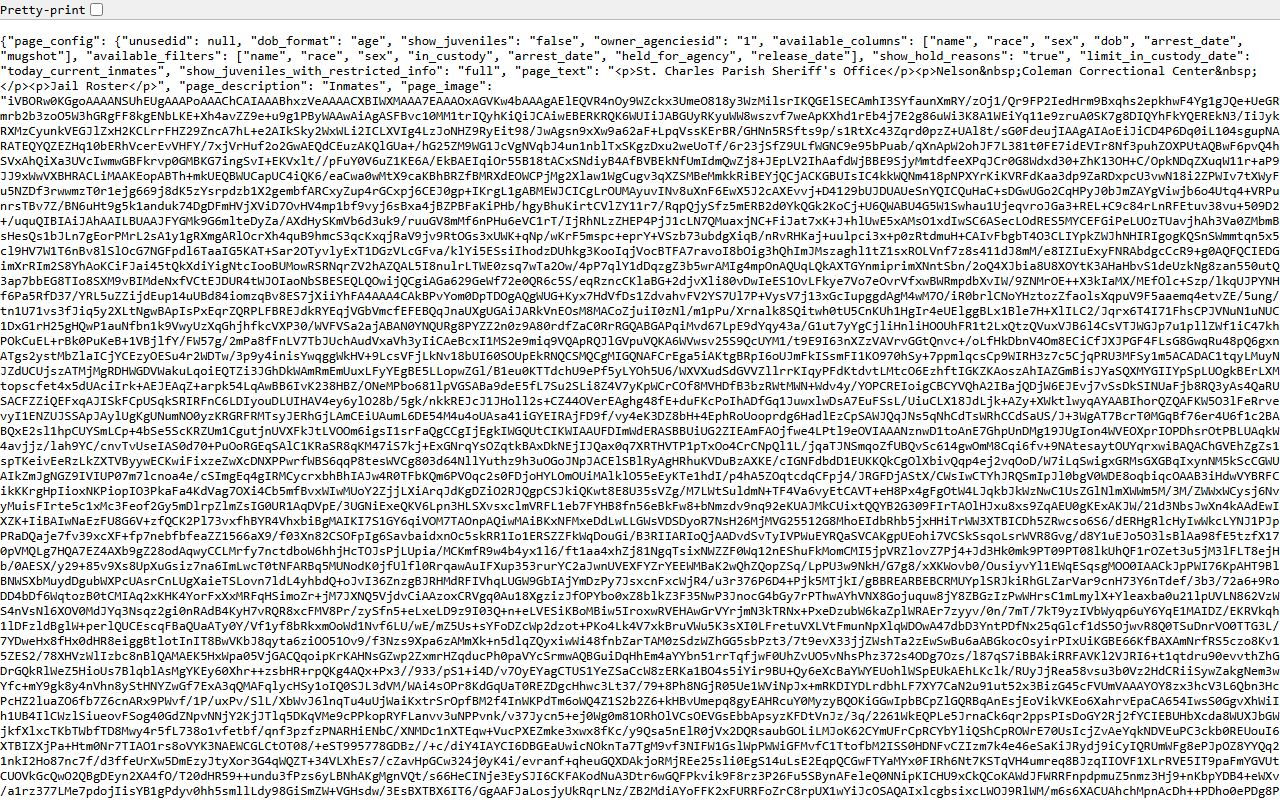
Those fields show how arrest-side data can include custody status, held-for agency, hold reasons, and age display.
Find St. Charles Parish Arrest Records
Use the sheriff's custody tools for current jail information, then use Clerk and court access for charges that have become court filings. The Sheriff's Office jail roster confirms visible columns such as name, race, sex, age, arrest date, and mugshot, with juvenile records not shown publicly. If the person is not in current custody or if the charge has moved into court, search the Clerk's public records links or contact the Clerk for a court case file.
- Check the sheriff's current jail roster when the question is custody, booking, arrest date, or held-for agency.
- Use the sheriff's warrant portal when the charge appears in an outstanding-warrant context.
- Search Clerk-linked court records for the filed charge, case number, arraignment, disposition, and sentence.
- Contact the District Attorney when the issue is prosecution status, victim services, or DA public-record routing.
- Contact the Clerk for certified court copies or case-file questions.
The outstanding warrants field configuration endpoint is an assigned source for charge fields in warrant records.
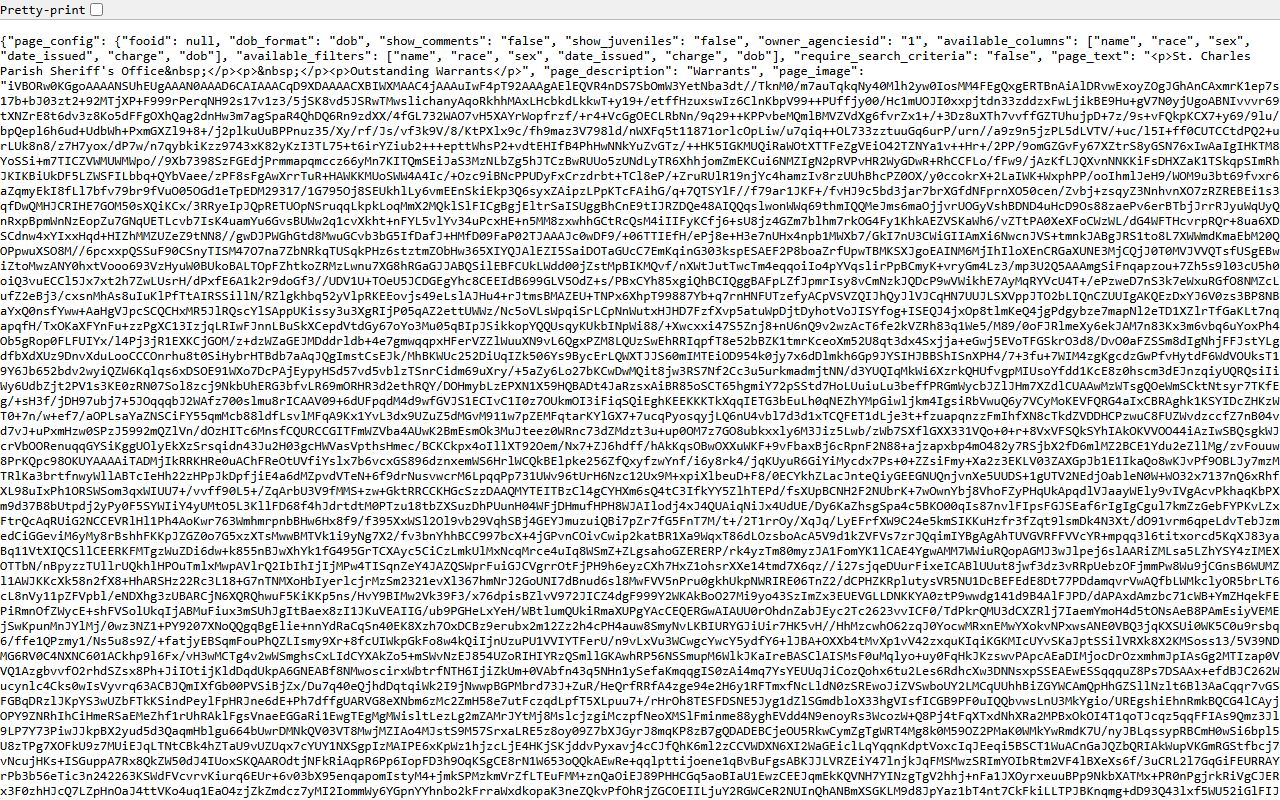
Warrant charge fields can point to alleged offenses, but the filed court case should still be checked for current status.
St. Charles Parish Charges After Arrest
The charge record begins when the prosecution or a charging process creates a formal accusation for court. Louisiana criminal cases often use a bill of information for prosecutor-filed charges, while an indictment is returned by a grand jury. A complaint may be used in earlier or lower-level charging contexts. These documents identify the accusation; they do not by themselves prove guilt.
| Document | Filed By | Common Use | What It Starts |
|---|---|---|---|
| Complaint | Officer or prosecutor | Initial or lower-level accusation. | Early charge or case process. |
| Bill of information | District Attorney | Many Louisiana criminal prosecutions. | Formal court charge filed by the prosecutor. |
| Indictment | Grand jury | Serious felony matters. | Formal grand-jury charge filed in court. |
Louisiana R.S. 44:3 identifies bills of information as public components even while some pending criminal investigative records remain restricted. That distinction is central for St. Charles Parish arrest records and charges: booking or warrant data may exist before or alongside the filed case, but the formal court charge is tracked through the court record.
St. Charles Parish Charge Records Status
A charge status tells what is happening to the accusation at a given point in the case. It can change. A charge that appears at booking may later be rejected, amended, reduced, or replaced by a different filed charge. A charge that appears in a bill of information may later be dismissed, resolved by plea, or tried. Always read the final disposition before treating a charge as a conviction.
| Status | What It Means |
|---|---|
| Pending | The charge is active and has not yet been resolved by dismissal, plea, verdict, or other final action. |
| Amended | The prosecutor or court record shows a changed charge, wording, count, or severity level. |
| Reduced | The filed offense was lowered to a lesser charge as part of the case process. |
| Dismissed | The charge was ended by court action and did not result in a conviction on that count. |
| Nolle prosequi | The prosecutor declined to continue prosecution on that charge. |
| Convicted | The defendant was found guilty or entered a guilty plea accepted by the court. |
Note: One arrest can produce more than one charge, and each charge can have a different outcome.
St. Charles Parish Charge vs Conviction Records
Charges after arrest and convictions are often confused. A charge is the accusation that starts or shapes the criminal case. A conviction is a later court result after a guilty plea, guilty verdict, or other finding of guilt. St. Charles Parish arrest records and charge data can show accusations that never become convictions, so the disposition and sentence fields are the key checkpoints.
| Point | Charge | Conviction |
|---|---|---|
| Legal meaning | An alleged offense filed or listed after arrest. | A court result establishing guilt. |
| Where it appears | Jail roster holds, warrant data, DA filings, and Clerk case entries. | Disposition, plea, verdict, and sentencing entries in the court case. |
| Can change | Yes, it can be amended, reduced, added, dropped, or dismissed. | The sentence or post-judgment status may change through later court action. |
| How to verify | Check the filed court charge and later docket entries. | Check the disposition and sentence in the criminal court record. |
St. Charles Parish Charge Codes
Charge language may include an offense name, statute reference, degree, count, or severity level. Research confirmed that St. Charles Parish charge-related data can appear in jail roster hold reasons, warrant portal charge fields, DA filings, and Clerk criminal case records. The exact portal field labels for the Clerk's criminal case search were not exposed without a session or login, so the safest approach is to use visible sheriff fields as leads and then verify the filed charge through the Clerk.
Louisiana uses terms such as bill of information, indictment, arraignment, disposition, sentence, probation, bond, warrant, bench warrant, and capias. A capias is a Louisiana term often used for a court order to take a person into custody. A disposition is the outcome of a charge or case. These terms matter because a search result may use short labels without explaining the case stage.
The law enforcement and criminal investigatory record limits statute is an assigned source for public and restricted charge components.
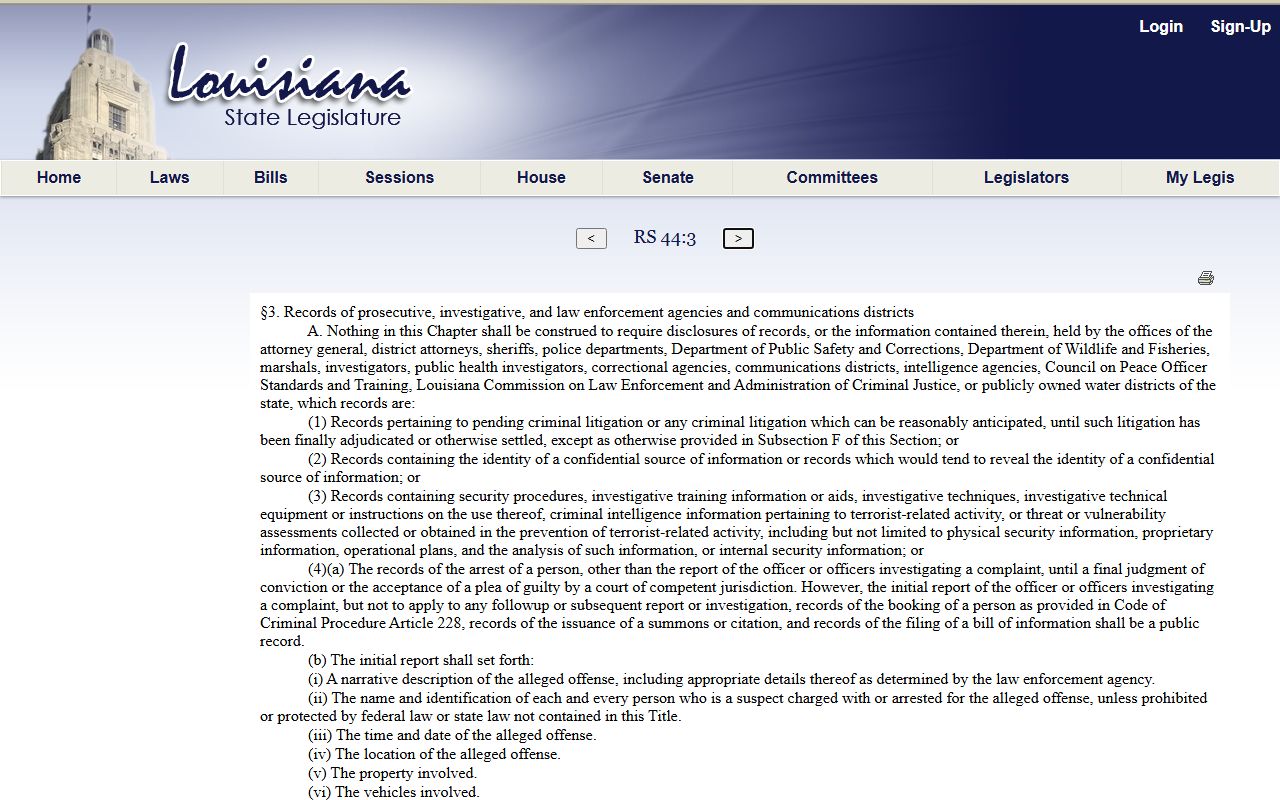
That statute explains why some arrest-related data may be public while pending investigative material is not.
St. Charles Parish Charge Office Roles
The 29th Judicial District Attorney for St. Charles Parish is Joel T. Chaisson, II. The DA's office is at 15045 LA 18/River Road in Hahnville, with published hours Monday-Thursday 8:30 AM to 4:30 PM and Friday 8:30 AM to 4:00 PM. The DA is the office that screens, accepts, amends, dismisses, or prosecutes charges after arrest. The DA site also includes victim resources, child support, worthless-check information, public-records requests, and a staff directory.
The public defender for St. Charles Parish is listed as District 29 by the Louisiana Office of State Public Defender. The district defender is Fen Swann, with the office at 13309 River Road in Luling. The local public defender site offers a request for public defender services and application-fee payment references. Public defender information is useful when a person finds active charges or a warrant and needs appointed-counsel access, but it is not a substitute for the court record.
29th Judicial District Attorney
15045 LA 18 / River Road
Hahnville, LA 70057
(985) 783-6263
Monday-Thursday, 8:30 AM to 4:30 PM; Friday, 8:30 AM to 4:00 PM
The District Attorney press release page is an assigned source for this arrest and charge topic.
DA sources help distinguish prosecution decisions from sheriff booking records and public court filings.
Restricted St. Charles Parish Arrest Records
Some arrest records and court charges are not fully public. Juvenile records are confidential under Louisiana Children's Code article 412 except for traffic violations and specific exceptions. Pending criminal investigative records may be restricted under La. R.S. 44:3, while public components such as booking records, summons or citation records, and bills of information can remain accessible. Public copies may also redact minor names, protected victim details, sensitive addresses, Social Security numbers, and financial identifiers.
Expungement can limit ordinary public access to eligible arrest and criminal case records, but the process usually requires the arresting agency, court case, charges, disposition, and legal basis. In St. Charles Parish, the court-file side is handled through the 29th JDC and Clerk, arrest and booking data may involve the Sheriff's Office, and prosecution data may involve the DA. No exact local expungement packet or current filing fee was located in the official research.